Essay
A Minute Standing
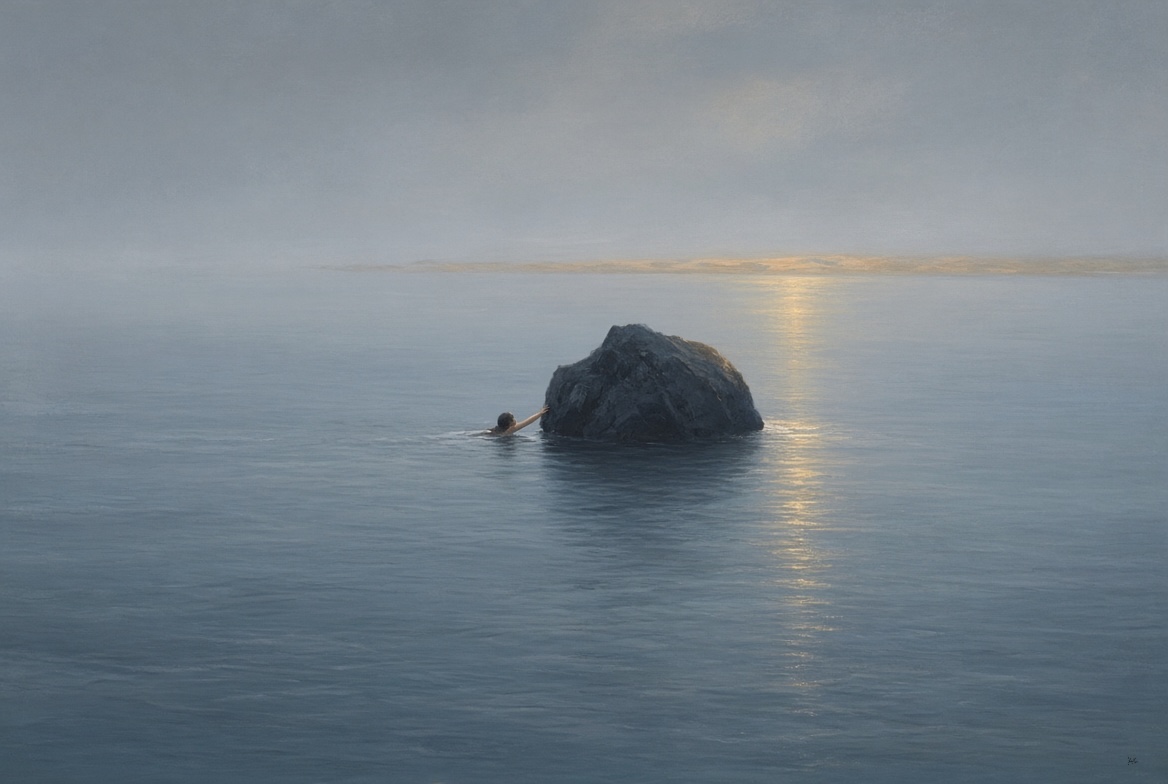
On a full beach in August, nobody is looking at the water. They are looking at each other, at their books, at the cooler, at the children digging. Thousands of people, and the sea is just the background.
Out past the break there is a swimmer. Not drowning. Not today. Just far out, and out for a long time, and the people on the sand would not know the difference anyway. Someone who is actually drowning rarely waves or shouts. The body spends everything it has on staying up, and there is nothing left for signalling. From the beach, it looks like someone swimming.
Saturday was World Mental Health Day. For one day the feeds filled with ribbons, helpline numbers and invitations to reach out. All of it was well meant, and most of it rested on one picture: the person in the water must be brought back to shore. Recovery as rescue. Out of the sea, onto the sand, done.
For a great many people, that picture is missing something. The sea is not an accident they fell into. It is where they live. They swim it every morning. Some mornings the water is flat and the work is almost easy. Some mornings it is not, and holding the surface is the whole day. This is not a failure to get better. It is the shape of the thing.
What does a swimmer like that need? Not the shore. A shore that keeps moving further away becomes its own kind of weight. What helps is smaller: a rock to put a hand on, a buoy, a sandbar where for a minute the feet find something solid and the lungs fill all the way. Nobody stays on a sandbar. That is not its job. Its job is the minute.
A good rest point asks nothing. It wants no story, no progress report, no estimate of how far there is still to go. Some of these rocks are people: the one who calls for no reason at all, or the colleague who notices someone has gone quiet and says nothing clever, only stays. Some are hours, like a long walk or a page. Some are a single sentence heard at the right moment, which is sometimes the only light there is, and is grabbed for exactly that reason.
The cruelty of the crowded beach is not that no one cares. It is that the caring is aimed at the wrong picture. Everyone waits for the shout, the wave, the hand above the water. Meanwhile the swimmer goes on, steadily and quietly, very far out. The most useful thing anyone could offer is not a rescue. It is a place to hold.
So, the day after the day, the question is not whether someone needs saving. It is simpler, and harder: is there anything near you that a tired hand could hold?
No one out there is asking for the shore. Only for the rock, and the minute.