Essay
What Saudade Keeps
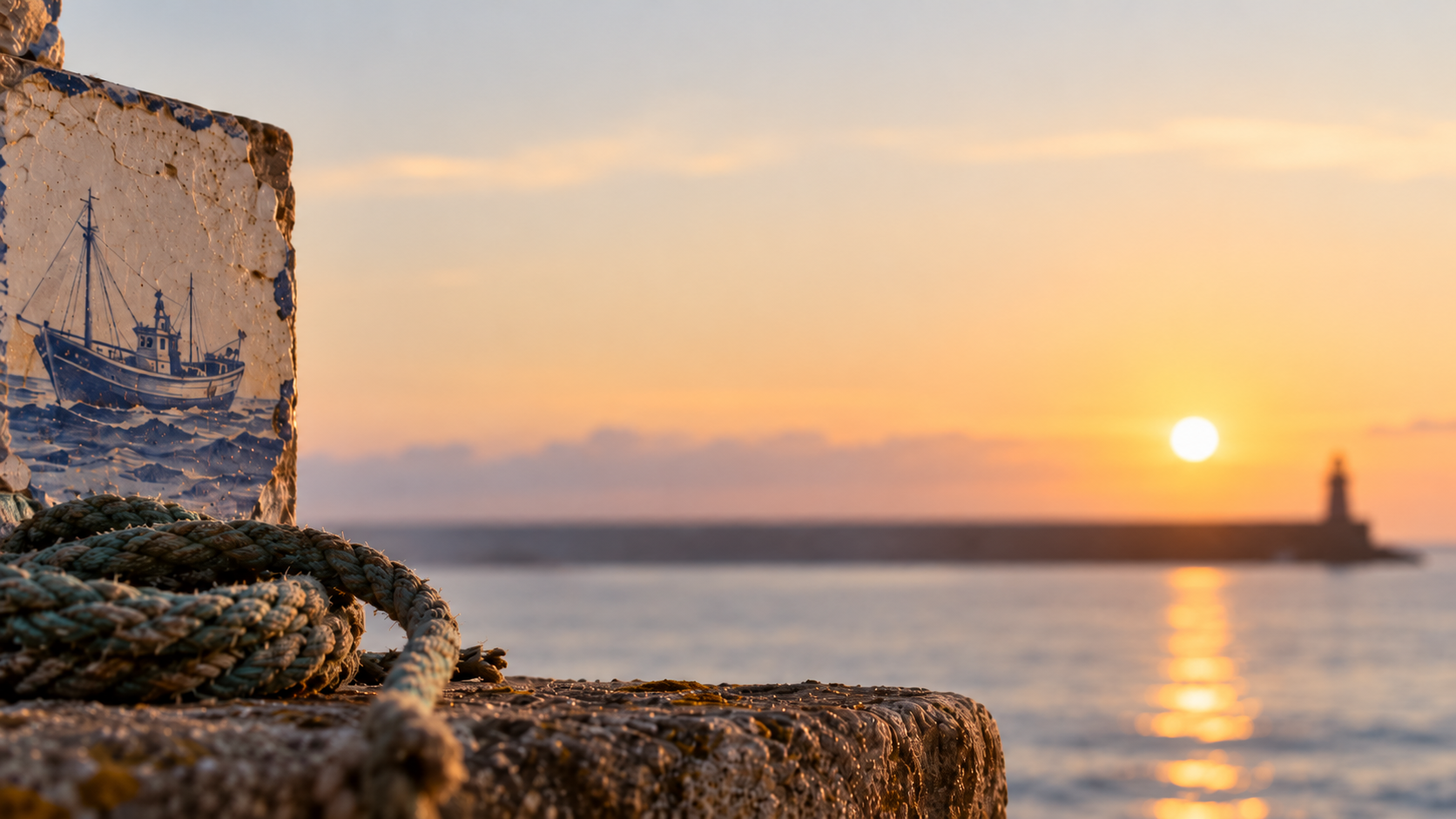
Every Portuguese child learns what saudade means long before learning to spell it. It means missing. Missing a person, a place, a time that won’t come back, missing with more weight than the English verb can carry. The dictionaries say much the same, a melancholy feeling brought on by absence, and for most of a life that definition holds without anyone thinking to check it. The word lives on the side of the hole. Some of us have even put it in writing, as the word for those who wait.
The people who first tried to define it said something else. In 1438 King Duarte of Portugal wrote a book of moral counsel for his court, the Leal Conselheiro, and gave the feeling a chapter it shares with grief, sorrow, displeasure and weariness. Then he spent that chapter pulling it apart from them. Saudade, in his account, is a feeling of the heart rather than of reason, and it is mixed: sometimes it brings more sadness than pleasure, and sometimes the reverse. Nearly two centuries later the grammarian Duarte Nunes de Leão tried to fix the word in a single line, and his line has no hole in it at all. Lembrança de alguma cousa com desejo dela. The memory of something, with desire for it.
Memory and desire. Both are things a living mind does on purpose. Neither one is an absence. Even the etymology points the same way: the word descends from the Latin solitas, solitude, which makes saudade what solitude becomes when it refuses to stay empty.
On one stretch of the northern Portuguese coast the word was never abstract. Vila do Conde and Póvoa de Varzim are fishing towns, and for generations they paid for what the sea gave them in the only currency the sea accepts. Boats went out and some did not come back. Few families there are without a name that stops in the middle of a sentence. Then, as though the water were not enough, the same towns carried a second debt in the blood. In 1952 a Porto neurologist, Corino de Andrade, published his description of a peculiar neuropathy he kept finding in Póvoa: fishermen, once strong, losing feeling in the feet, then the hands, then everything else. The country came to know it as a doença dos pezinhos, the disease of the little feet. It ran in families. The liver at the centre of it was healthy, only making the wrong version of a protein, and that protein was destroying the nerves. For about twenty years the main treatment was to take that healthy liver out and put another one in.
So these towns know saudade from both directions. The sea took sons and brothers all at once. The disease took them slowly, a little more each year, with time to watch. Those who left, for work, for an oath, for whatever pulled them across the water, pay the same price from further away. If saudade were only the pain of absence, this would be the saddest coast in Europe. It isn’t sad. It’s fierce. The missing is daily, and nobody there is trying to get over it.
But what if the pain was never the point?
What the old definitions knew, and what the coast still knows, is that the alternative to saudade isn’t peace. It’s forgetting. It’s allowing the warmth of a particular life to go cold and dissolve, gently, into the general picture, the way the sea smooths whatever it keeps. Saudade is the refusal. It’s choosing to burn rather than let that happen, and burning leaves marks. The scars aren’t the wound. They’re the receipt for the work.
It takes most of a life to see it this way, and the change is not small. The object hardly matters. It can be a person. It can be a stretch of coast, a kitchen, a language spoken at one particular table. It can be a love that ended and still has a temperature. What saudade does is the same in every case: it keeps the flame lit by hand, on purpose, against the long patience of forgetting. Missing is what happens to us. Saudade is what we do about it.
Anyone who has worked in transplant knows a plain fact that sits under everything else in the job. An organ outside a body is only as alive as the effort spent keeping it that way. Leave it without oxygen and it runs down. Keep oxygen moving through it, at the right pressure, and it holds. Nobody doing that work thinks of the effort as a symptom of something wrong. It is the work. Saudade belongs to the same family. It’s perfusion for the people we’ve lost, done by hand, for as long as there’s flow.
The work does end, and the end isn’t forgetting. Blood returns to the heart through the veins at a pressure so low it barely registers on a monitor, a few millimetres of mercury, and the whole circulation depends on it. Saudade lives there, in the return. For as long as the veins carry something back to the heart, the people we lost keep arriving with it. When that pressure finally falls, the keeping passes to someone else, and we become a name in somebody’s mouth on a harbour evening, held by people who refuse to let it fade.
A few millimetres of mercury. Enough to keep someone warm.